DIY: Make your own natural sauna fragrances
A sauna is not just about heat, but also about experience. The scent released when water evaporates on hot stones largely determines how relaxed you feel. More and more sauna enthusiasts are choosing to shape that scent experience themselves. Not with ready-made products, but with natural ingredients that suit the moment and the season. Making your own sauna scents is surprisingly simple and gives you complete control over what you inhale during your sauna session.
In this blog, you will learn how to compose your own natural sauna scents, which ingredients are suitable, and what to consider when using them. Practical, creative, and applicable, without complicated steps.
Why choose natural sauna scents?
In the sauna, your body is fully engaged in relaxation and recovery. That's why many people prefer to choose scents without synthetic additives. Natural sauna scents are pure, recognizable, and align better with the tranquility you seek in the sauna.
Additionally, with natural ingredients, you can easily introduce variety. One evening calls for fresh notes, while at another time you might choose a warm, spicy scent. By mixing yourself, you adapt the scent experience to your mood. For those who regularly use an outdoor sauna, it's pleasant to use ingredients that you trust and recognize from nature.
Which ingredients are suitable for DIY sauna scents?
You don't need to gather an extensive collection to make your own sauna scents. A few basic ingredients will get you a long way. The most important principle is to work with natural materials that can withstand heat.
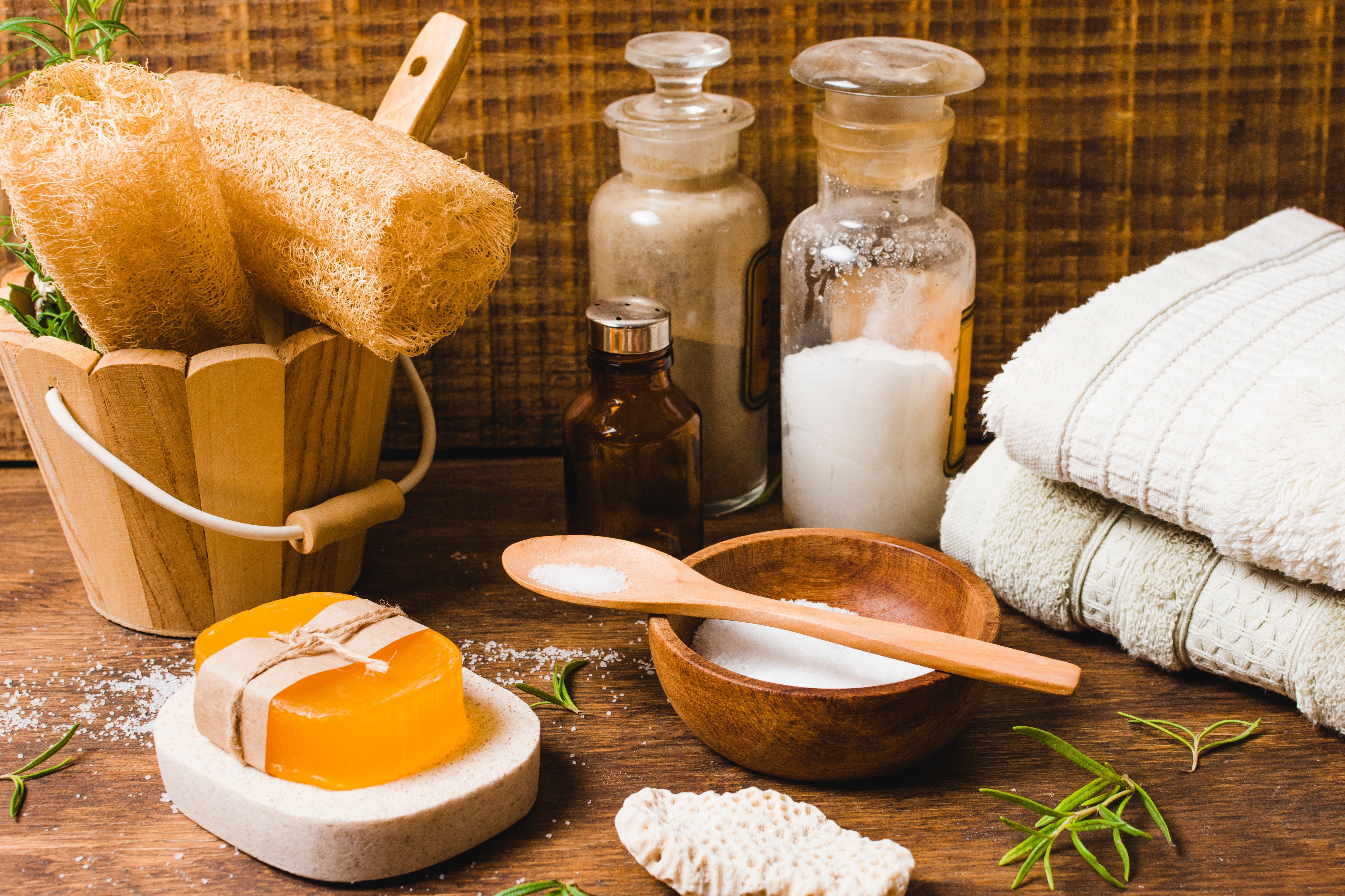
Fresh or dried herbs such as eucalyptus, rosemary, and mint are popular for their fresh character. Pine branches or spruce tips also give a recognizable sauna scent reminiscent of a forest environment. For a warmer scent, you can consider cinnamon sticks, cloves, or orange peel.
Essential oils are also used, but always in very small quantities and highly diluted. It is about subtle support of the scent, not dominance.
Making your own sauna water with herbs and plants
A simple way to apply natural sauna scents is by making a fragrant infusion that you add to the ladle water. You do this by briefly steeping herbs or plants in warm water. The result is a mildly scented water that releases a gentle fragrance when heated.
For example, you can put a handful of mint and eucalyptus in a heat-resistant bowl and pour warm water over it. Let it sit for a few minutes before use. The scent is released as soon as the water hits the stones. This method is low-threshold and ideal if you want to experiment without following fixed recipes.
Adjusting scents to the time of day
Not every scent suits every moment. In the morning, many people opt for fresh, clear scents that evoke an awakening feeling. In the evening, warmer and softer scents are often more pleasant.
A combination of citrus and pine provides a fresh start, while lavender with a hint of clove brings calm after a long day. By varying, each sauna moment continues to feel different. The fun of mixing yourself is that you are not tied to fixed combinations. You will naturally discover which compositions suit you.
Safely handling DIY sauna scents
Although natural ingredients are mild, it's important to handle sauna scents consciously. Never use pure essential oil directly on the stones. Always dilute generously and start with small amounts. Test new combinations cautiously first.
What smells pleasant in a bowl can become more intense in the heat of the sauna. By building up slowly, you prevent a scent from becoming too strong. Ventilation also plays a role here. Ensure the sauna is well-ventilated between sessions.
Creative ideas for seasonal scents
Making your own sauna scents invites creativity. In autumn, woody and spicy notes work well, while in spring, fresh and floral scents are popular. Think of citrus peel in summer or pine needles in winter.
You can even make small bundles of herbs that you use multiple times. By letting them dry thoroughly after use, you extend their lifespan. This personal approach makes every sauna moment unique and tailored to the season.
The sauna as part of your garden experience
For many, a sauna is more than just a wellness facility. It is a place where tranquility, nature, and comfort come together. By creating your own scents, you strengthen that connection with your environment.
At Happy Timber, it's all about that total experience. Not only the design and placement of the sauna play a role, but also how you use and experience the sauna. Scent is a subtle but important factor in this.
Common mistakes with homemade sauna scents
A common mistake is using too many ingredients at once. This can lead to a chaotic scent experience. It's better to keep it simple and combine a maximum of two or three elements.
Also, it's sometimes forgotten that scents become stronger with heat. What seems mild in cold water can become overpowering in the sauna. Less is truly more in this case. By experimenting calmly, you'll quickly learn what works.
Creating your own scent experience without fixed rules
There is no fixed recipe for the perfect sauna scent. What works as relaxing for one person might be too intense for another. That's precisely what makes DIY sauna scents so appealing. By playing with natural ingredients, you develop your own preferences. This makes every sauna visit personal and tailored to your wishes.
After making your own natural sauna scents, it becomes clear how strongly scent contributes to relaxation and experience. By using conscious ingredients, a personal ritual is created that fits your way of relaxing. Wellness doesn't have to be complicated: it often lies in attention, tranquility, and simplicity. Thus, every sauna moment becomes a permanent part of your own wellness routine, tailored to your taste and pace.
At Happy Timber, everything revolves around peace, wellness, and enjoyment in your own outdoor space. You are not only welcome to us for an outdoor sauna, but you can also explore options for a hot tub tailor-made. Easily schedule an appointment online and view the possibilities in person. This way, you can experience for yourself which setup and appearance best suit you.
FAQ: Frequently asked questions about natural sauna scents
Which herbs are most suitable for sauna scents?
Eucalyptus, mint, rosemary, and pine needles are most commonly used due to their recognizable scent and heat resistance.
Can I use essential oil in the sauna?
Yes, but only highly diluted and in small quantities. Never use pure oil directly on the stones.
How often can I use homemade scents?
That depends on the ingredient. Dried herbs can be used multiple times as long as the scent remains.
Are natural sauna scents suitable for everyone?
Generally, yes, but people with sensitive airways should start cautiously.
Can I combine scents with multiple sauna sessions in one day?
Yes, but alternate scents and ensure the sauna is well-ventilated in between.